Sudanese herders struggle to safeguard livestock amid devastating war
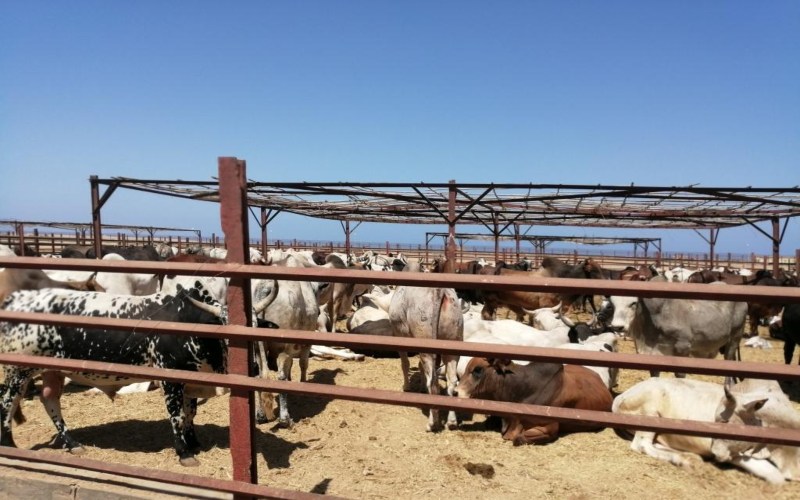
Sudan's livestock sector, once a pillar of the national economy that contributed over 20 per cent of GDP with an estimated 140 million animals, has been devastated since the fighting erupted in April 2023.
Under the vast, fading light of Muglad, a city in Sudan's West Kordofan State once dubbed "the grazing paradise", Abdul-Khaliq Saeed looked over what remains of his life's work: 200 sheep and a handful of camels. In his eyes, worn by years of war, there is loss, but there is also a stubborn, weathered resolve.
"I used to own around 800 head before the war. Everything changed," said Abdul-Khaliq, adjusting his turban in the dry heat. "Armed groups looted more than half the herd, others died from hunger and disease, and even the storage rooms where we kept the fodder went up in flames."
More To Read
- All we want for Sudan is peace, say children fleeing violence
- US sanctions network accused of recruiting Colombians to fight for Sudan’s RSF
- ICC sentences Sudanese militia leader Ali Kushayb to 20 years for Darfur war crimes
- Sudan puts Russian Red Sea naval base plans on hold to focus on domestic crisis
- Sudan: Kordofan cannot become ‘another El Fasher,’ UN rights chief warns
- Sudan’s crisis deepens with communities trapped in ‘siege conditions’
The man in his 50s fled with what was left, moving through the desert by night. "The night was our only ally," he recalled.
However, survival, once Abdul-Khaliq and his livestock found a patch of safety, grew even harder. Markets have been paralysed by the conflict, fodder is scarce and costly, and disease now stalks the herds more relentlessly than bullets.
"Sometimes I sell one animal to feed the rest, and sometimes I spend a whole day searching for sorghum or bran," Abdul-Khaliq said, resting a hand on one of his tired sheep.
Every two weeks, Abdul-Khaliq treks to a distant veterinary clinic in search of vaccines, often returning empty-handed. Still, he persists. "I fear diseases more than bullets," he admitted, his voice quiet but unbroken.
Then, briefly, he smiled - the tough, knowing smile of a desert herder. "Livestock is not just a trade; it is our life," he said. "As long as I can walk, I will protect it."
Abdul-Khaliq 's story echoes across Sudan's pastoral heartlands, where some 7 million people depend on herds that are now both livelihood and lifeline in a war-torn country.
Sudan's livestock sector, once a pillar of the national economy that contributed over 20 per cent of GDP with an estimated 140 million animals, has been devastated since the fighting erupted in April 2023. Global reports estimated over $1 billion (Sh129 billion) in Sudan's livestock export losses in the first half of this year, driven by closed roads and fuel prices that have tripled.
In Kordofan and Darfur, regions that hold 60 per cent of the nation's herds, rangelands have been burned, veterinary centres destroyed, and animals looted as spoils of war. In West Kordofan State alone, herd numbers have fallen by 40 per cent, according to the Environmental Conflict Centre.
"Armed groups treat livestock as spoils of war. In one night, I lost 300 head," said Fadallah Makin, a herder from Al-Fula, a town in West Kordofan State. "Water and pasture are so scarce that we sometimes rent vehicles to bring water from towns, while fodder is almost unavailable."
Yet in the midst of collapse, there have emerged signs of resilience. In September, Sudan exported 4 million head of livestock, a 10-per cent increase over the previous year, buoyed by growing demand from Saudi Arabia and Egypt.
"We supported local associations in production areas, especially in Kordofan, where herders share fodder and grazing land," said Ammar Al-Sheikh Idris, undersecretary at the Ministry of Animal Resources and Fisheries."We also carried out community vaccination campaigns covering 70 per cent of herds in safe areas, in cooperation with the Food and Agriculture Organisation (FAO)."
The ministry is now advancing a five-year strategy that includes creating "livestock production cities," building fodder factories, localising vaccine production, and improving grazing environments, he said.
"The sector paid the price of war," said Husham Saleh of the Livestock Exporters Association. "We lost slaughterhouses, quarantine stations, and research centres, and many animals died. Yet herders and the government have shown remarkable resilience."
As the sun dipped lower, Abdul-Khaliq watched his animals gathering close. "Today, I sell some of the production in local markets and rely on government-subsidised fodder," he said. "The war stole much from us, but we learned how to endure with little."
Top Stories Today